
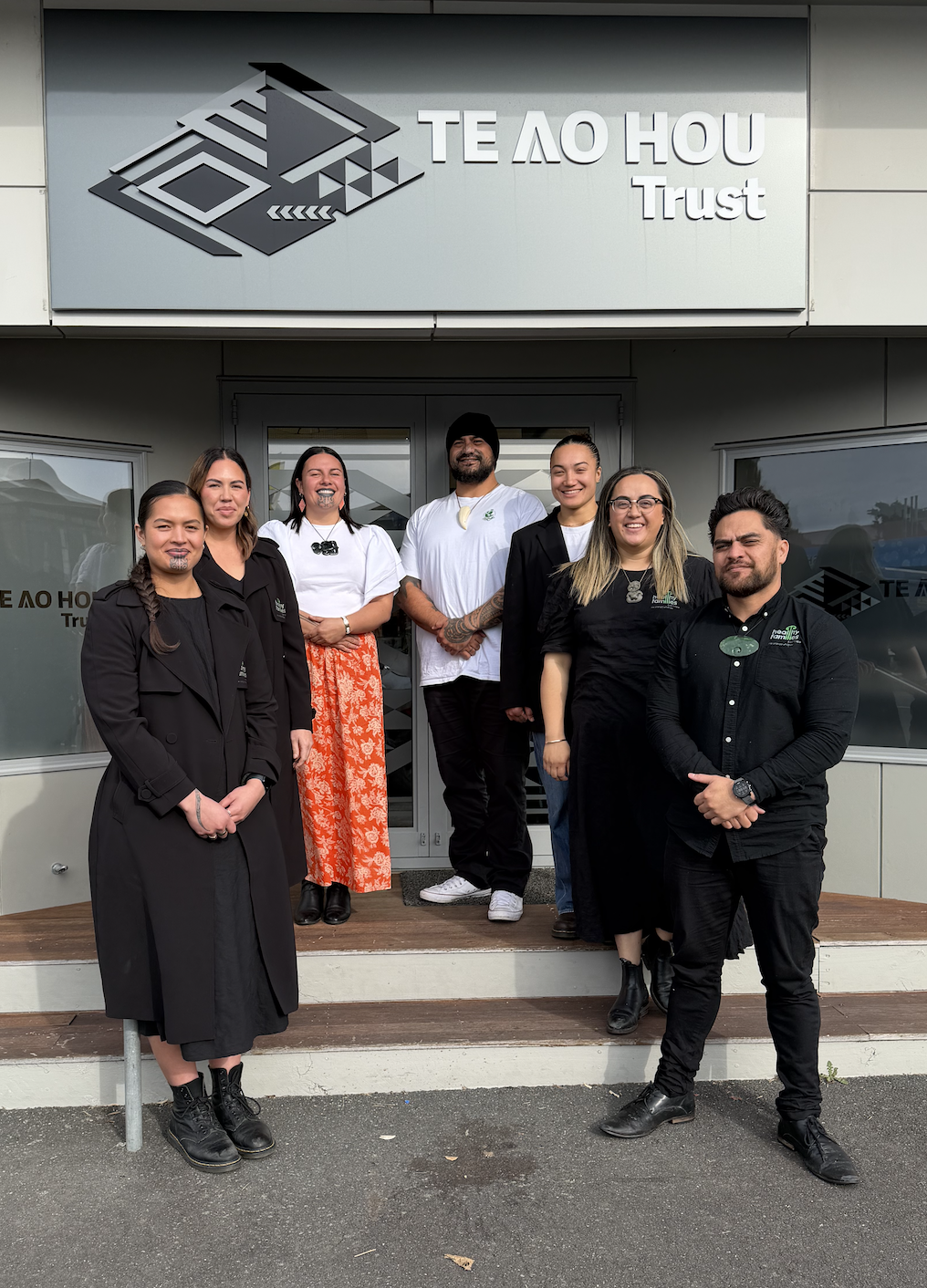
People are the power behind systems change. People who understand their hapori, who build relationships, who connect different parts of the system to create opportunities for things to work differently, are the people who make systems change possible. The importance of systems change comes down to the people in the systems workforce.
Our Healthy Families East Cape team is continuing to grow this workforce, recognising that change takes people with the skills, mātauranga and relationships to help bring those ideas to life. But what does it actually take to build a systems workforce, and what are we learning along the way?
Working across a diverse rohe like Te Tairāwhiti brings its own opportunities and challenges. Our hapori, organisations and kaupapa each have their own priorities, strengths and ways of working. Connecting these different parts of the system takes time, trust and a willingness to look beyond individual projects to understand the bigger picture.
For our kaimahi, this means constantly learning, listening and navigating complexity. It means having conversations that challenge existing thinking, recognising where connections could be stronger and identifying opportunities for different people and organisations to work towards shared aspirations.
It's often in the everyday kōrero that some of the most valuable learning happens. Whether it's a conversation during a team catch-up, reflections from a kaupapa meeting or a connection made between people who may not have otherwise crossed paths, these moments can open up new ways of thinking about the mahi. They help our team recognise what's already happening across the rohe, where there are gaps and where collective effort could create something different.
One example of this has been through the Ōpōtiki kai systems mapping hui, where conversations about kai opened up a bigger picture of what's influencing the local kai system. What initially might seem like a conversation about access to affordable, nutritious kai, quickly uncovered wider challenges around time, pūtea, the loss of mātauranga Māori, storage infrastructure and the changing relationship our hapori has with kai. These conversations highlighted that strengthening local kai systems means reconnecting people, mātauranga, resources and opportunities. It also reinforced the importance of bringing different voices together to understand the challenges and identify where collective action could make a difference.
This is also where the capabilities of a systems workforce become important. Systems kaimahi need to be comfortable with uncertainty, build and maintain relationships, bring different perspectives together and recognise when to step back and let our hapori lead. These capabilities take time to develop and are strengthened through experience, reflection and working alongside others.
Research into Healthy Families NZ has reinforced the value of investing in a dedicated systems-thinking community workforce, highlighting the importance of local knowledge, relationships and the ability to influence the wider conditions that shape health and wellbeing (Matheson et al., 2024).
For Healthy Families East Cape, growing this workforce is an important part of strengthening our mahi across Te Tairāwhiti. As new kaupapa emerge and existing relationships continue to develop, having the right people and capabilities around the table helps us build on what's already happening and create opportunities for further change.
We're excited to be expanding our team with new kaimahi bringing fresh whakaaro, skills and experiences into the mix. And we're not quite finished growing, with another systems kaimahi on the way. As our team grows, so does our collective capacity to connect, learn, challenge and support the mahi happening across our rohe.
Reference:
Matheson, A., Wehipeihana, N., Gray, R., Walton, M., Uia, T., Lindberg, K., ... & Ellison-Loschmann, L. (2024). Building a systems-thinking community workforce to scale action on determinants of health in New Zealand. Health & place, 87, 103255.