
Matari‘i Nia: A Systems View of Collective Wellbeing Across Te Moana Nui a Kiwa and What This Means for Our Mahi at Home
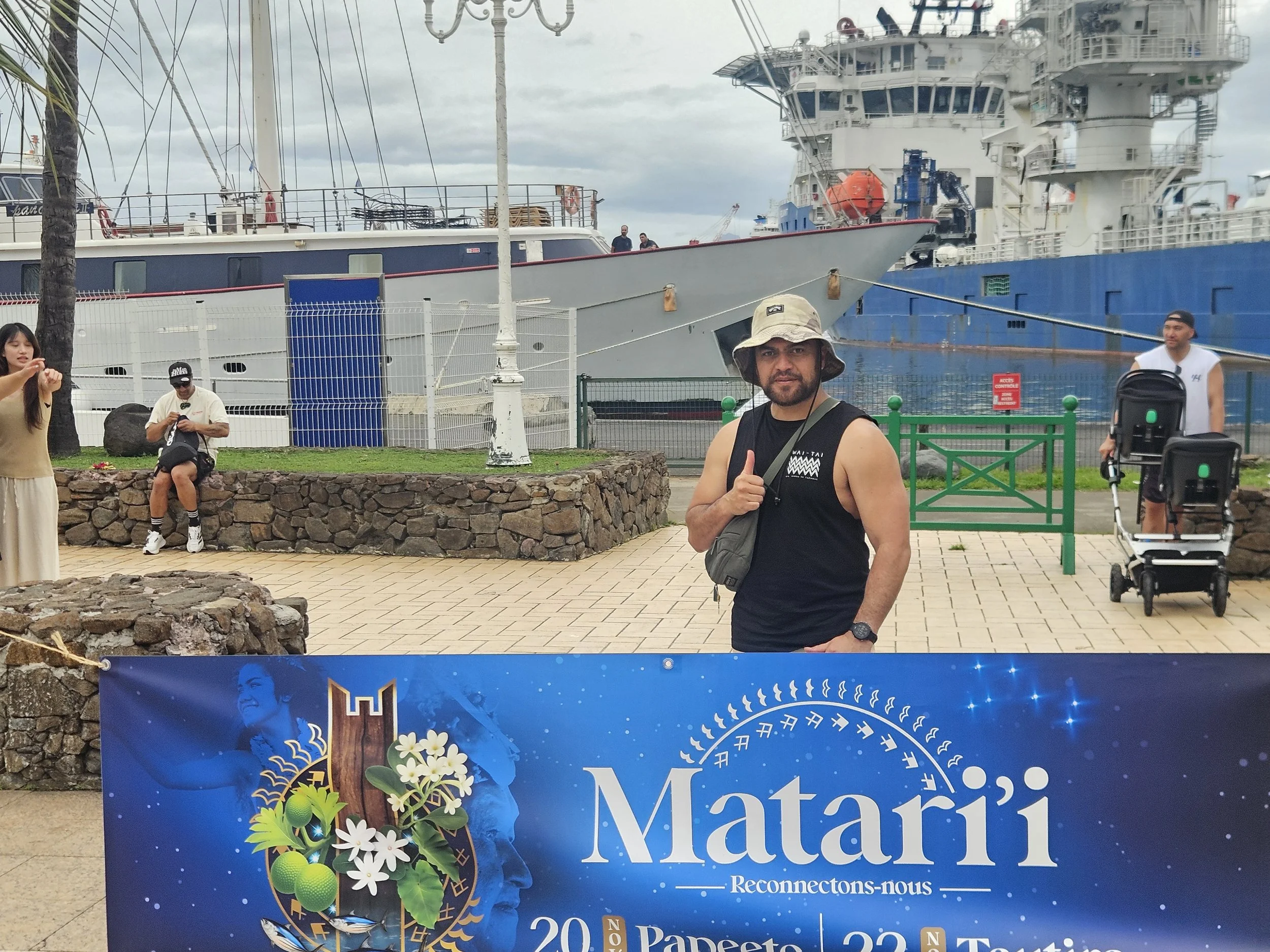
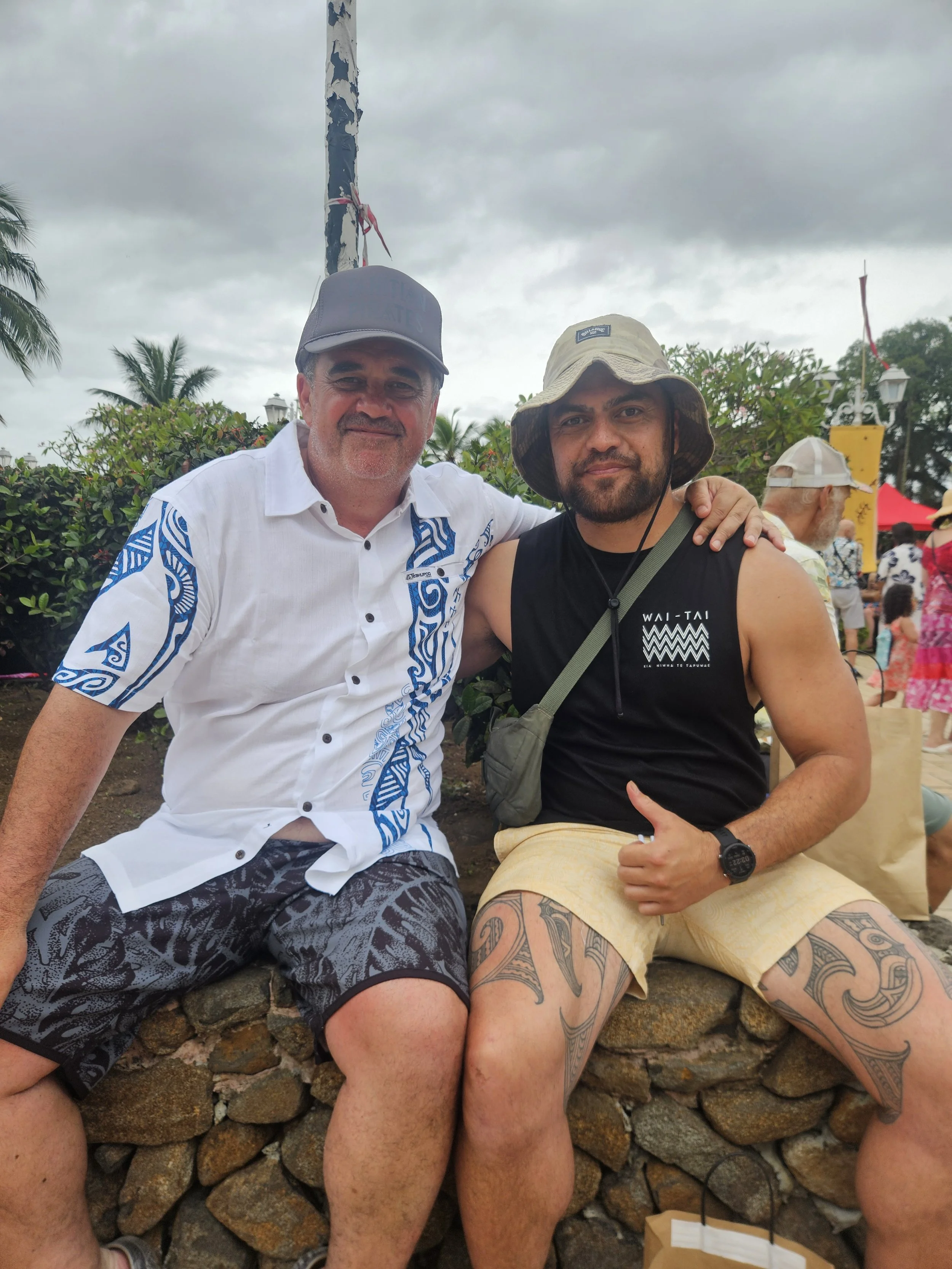
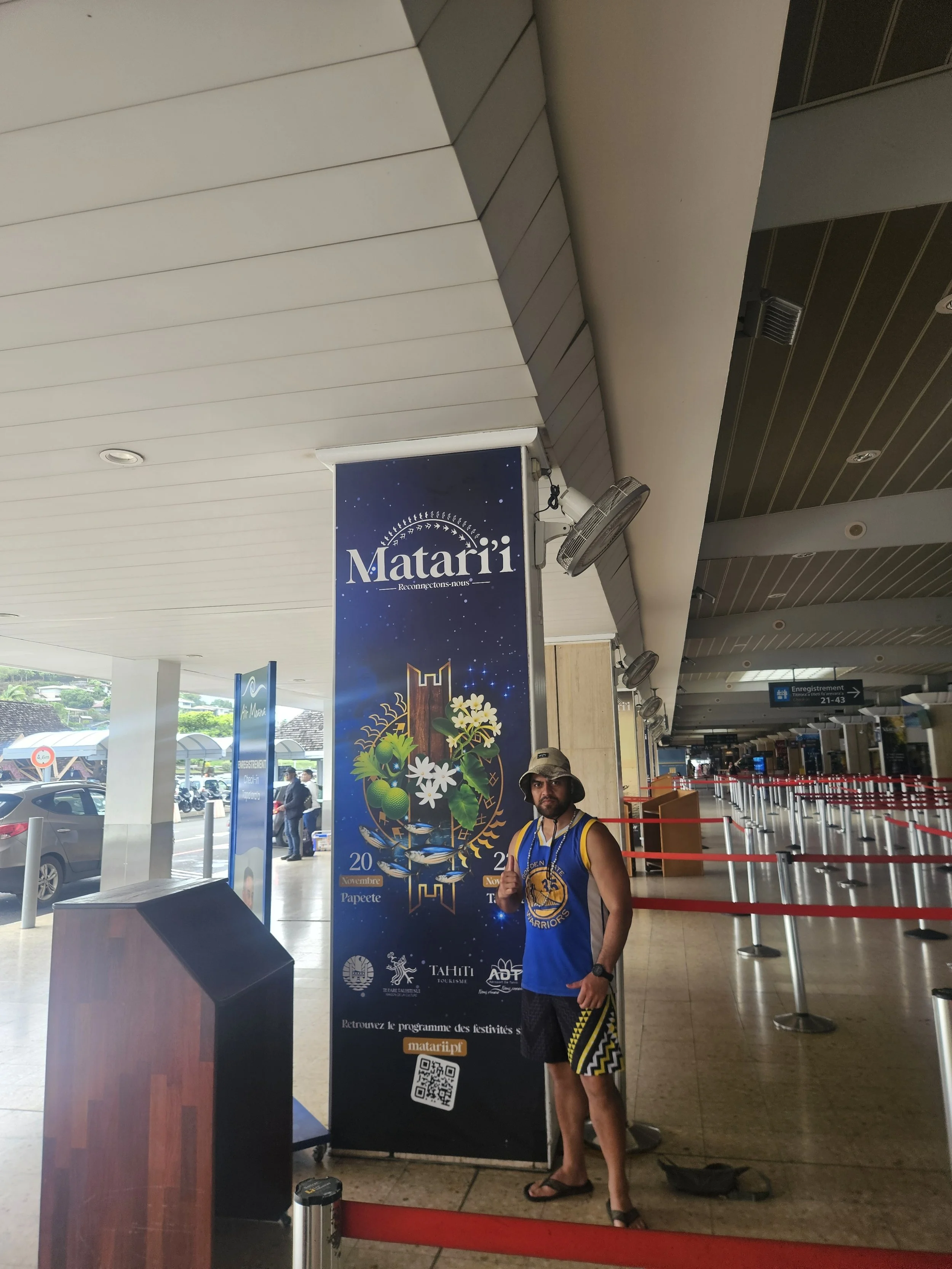
In November last year, our Rautaki Māori, Jade Kameta, travelled to Tahiti during Matari‘i Nia. While the journey was personally meaningful, the insights carried home are firmly grounded in prevention practice, systems change and how Healthy Families East Cape (HFEC) continues to design wellbeing into the everyday environments of Te Tairāwhiti.
From the moment Jade arrived, it was clear that Māori and Ma’ohi (Tahitian) peoples are navigating many of the same health challenges. What was equally clear is that the solutions are shared. These challenges did not emerge in isolation, and they will not be resolved in isolation either.
Our peoples descend from a shared knowledge system of Te Moana Nui a Kiwa, shaped by shared histories, shared migrations, shared whakapapa, and shared mātauranga. Long before national borders existed, our tūpuna developed wellbeing systems that were mobile, adaptive, and responsive to place, season, and collective need. This understanding sits at the heart of HFEC’s prevention approach where we work upstream, grounded in Indigenous knowledge, designing systems that fit the realities of our hapori rather than asking whānau to adapt to systems that were never built for them.
Matari‘i Nia marks the rising of the Pleiades in the evening sky, appearing just as the sun sets. Like Matariki in Aotearoa, it signals a seasonal shift and a change in collective energy. In Tahiti, this rising is associated with abundance, growth, and flourishing. From a systems perspective, what stood out was how this celestial marker continues to actively shape social behaviour, food systems, policy decisions, and collective priorities.
Equally important is Matari‘i i raro, the later setting of the Pleiades, which signals restraint, reflection, and preparation for leaner times. Together, these observances form a complete wellbeing cycle. From a prevention lens, this matters deeply. Indigenous systems teach us when to expand and when to conserve, when to gather and when to pause. HFEC applies this same thinking locally by recognising rhythm and readiness in our hapori, aligning our kaupapa, timing, and partnerships to where energy and opportunity already exist, rather than forcing change.
For our Rautaki Māori being in Tahiti reaffirmed why HFEC’s approach centres systems. Everywhere Jade went, the strength of collective memory was visible, knowledge is held, shared, and practiced together. This is the same principle that underpins HFEC’s mahi at home. Our role is not to deliver programmes to whānau, but to work alongside iwi, hapū, marae, kura, councils, and community leaders to reshape the conditions that influence everyday wellbeing.
From a Healthy Families perspective, several observations from Tahiti closely mirror the work already underway in our own backyard.
In Tahiti, fresh kai was abundant, visible, and accessible by design. Fruit trees grew freely in public spaces, night kai markets operated daily, and processed food marketing was minimal. These are structural conditions that make healthy options the easiest options.
At HFEC, this same principle guides our mahi. We work upstream with local partners to strengthen food environments, support access to nourishing kai, and challenge systems that normalise unhealthy defaults. Rather than focusing on individual choice, we help shape the environments where choices are made, from community-led kai initiatives to policy and planning conversations that influence availability, affordability, and visibility of healthy kai.
On the Matari‘i public holiday, no alcohol was sold anywhere. This approach centred whānau safety and cultural celebration without placing responsibility on individuals.
This aligns strongly with HFEC’s alcohol harm prevention approach. We focus on shifting the conditions that enable harm, working with hapori and decision-makers to explore policy, practice, and cultural approaches that prioritise collective wellbeing. Prevention is about creating safer options.
Matari‘i celebrations in Tahiti were visible everywhere there were parades, shared waiata, public signage, and collective participation. Culture functioned as infrastructure, strengthening identity, belonging, and social cohesion.
HFEC applies this same systems thinking by centring mātauranga Māori and tikanga in how we work. Culture is not an add-on to our mahi, it is the platform through which prevention happens. By supporting community-led kaupapa, strengthening relationships, and embedding Indigenous values into decision-making spaces, we help build environments where whānau feel connected, valued, and supported.
Jade was privileged to wānanga with Heipua Teariki Bordes, a respected tohunga of Mo‘orea, whose whakaaro reinforced that the most effective response to today’s environmental and health challenges is not innovation for its own sake, but a return to Indigenous systems as living, adaptive frameworks.
Visiting Raiatea and Taputapuatea, a central voyaging and learning homeland, further grounded this understanding. It reinforced that the Indigenous peoples of Te Moana Nui a Kiwa are part of the same ancestral system and that our collective futures are strengthened when we respond to shared challenges together.
This mirrors HFEC’s commitment to connection and collaboration across sectors, communities, and regions. When knowledge is siloed, systems weaken. When relationships are prioritised, collective capacity grows.
Jade also performed at Te Hura Tapairu with Ngā Toa Tapairu o Te Arawa, they were the first Māori kapa invited to perform, this was another expression of this shared system. The manaaki extended reflected values that prioritise relationships, respect, and collective strength which are values that also underpin HFEC’s way of working.
Another highlight for our Rautaki Māori was reconnecting with tohunga kōkōrangi Dr Rangi Mātāmua, whose leadership continues to shape how mātauranga Māori informs public understanding and policy. His role in both Aotearoa’s Matariki public holiday and Tahiti’s Matari‘i public holiday reflects how Indigenous leadership can guide systems change that strengthens identity and supports collective wellbeing.
Reflecting on this journey the lesson for HFEC is clear. Prevention works best when it is grounded in Indigenous knowledge systems that are place based, relational, and designed for collective wellbeing. This is our practice.
HFEC’s role is to translate these principles into action locally by:
working upstream to address root causes
shaping the conditions that influence everyday well-being
designing environments, relationships, and systems that support whānau
and embedding mātauranga Māori into prevention practice across Te Tairāwhiti
Māori and Ma’ohi peoples face similar health challenges because we have experienced similar disruptions to our systems. The solutions are also similar, because they come from the same ancestral knowledge base. Our collective memory holds the wisdom. Our collective identity provides direction. And our collective wellbeing grows when we remain connected, share mātauranga, and actively build prevention systems that reflect who we are as peoples of Te Moana Nui a Kiwa.
Jade acknowledges his cousin Raukura Roberts and Epic Māori, whose support made this opportunity possible, his whānau Ngā Toa Tapairu o Te Arawa, and his whānau across Tahiti, Raiatea, and Mo‘orea, e kore te aroha e mimiti.
References:
Radio New Zealand. (2024). Tahiti prepares for its first Matari‘i public holiday.
https://www.rnz.co.nz/news/world/565465/tahiti-prepares-for-its-first-matari-i-public-holiday
Tahiti Tourisme. (n.d.). Matari‘i festival.
https://www.tahititourisme.nz/event/matarii-festival/
Maison de la Culture de Tahiti. (2024, November). Matari‘i i ni‘a celebrations in Tahiti [Video]. Facebook.
https://www.facebook.com/share/v/1CgsQMYQ7L/